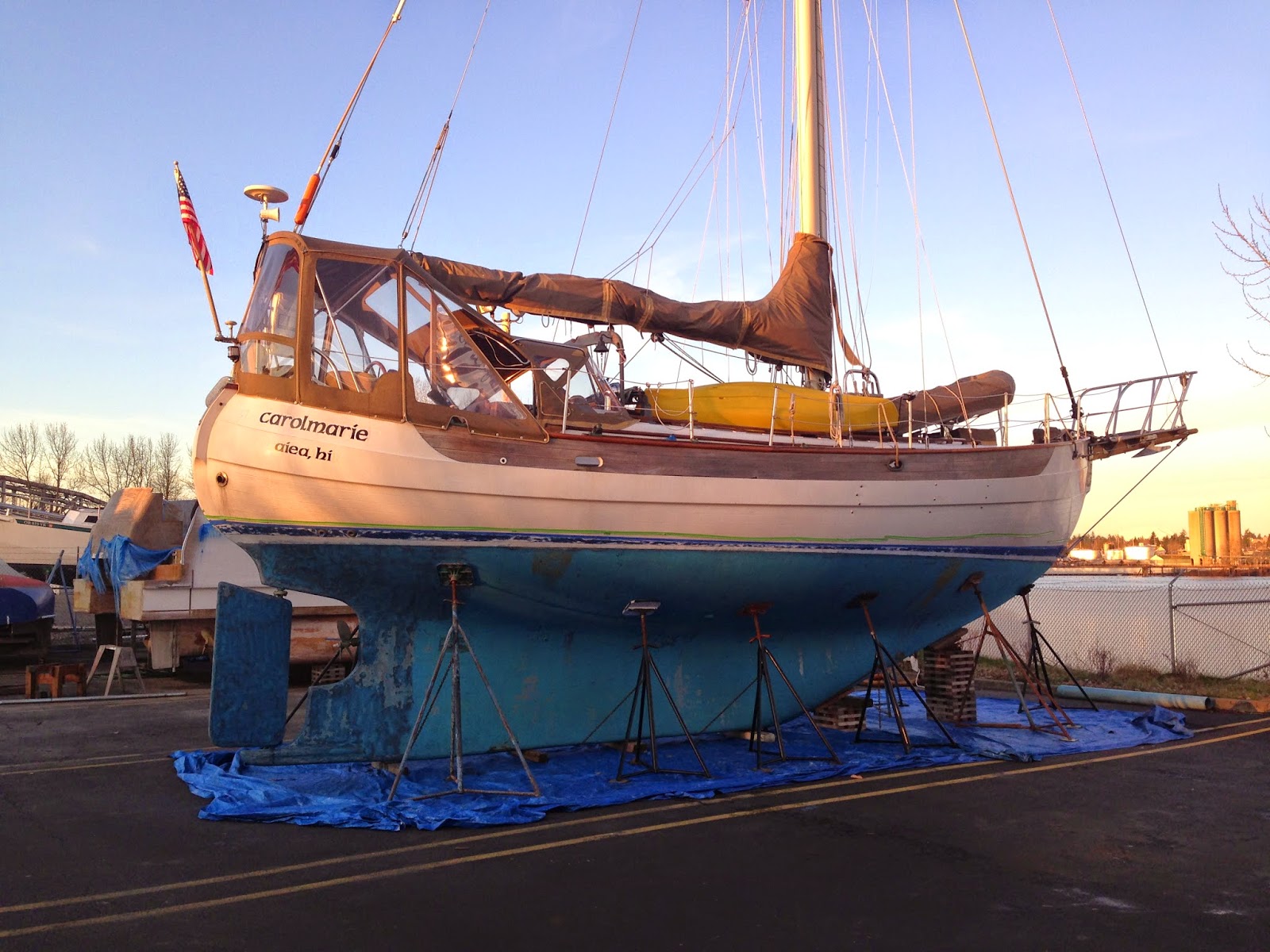
In sailing up and down the Columbia River I always wondered
what the context was for the European settlements along the river. Because of work, I have been traveling a
great deal, for example New York City one week followed by a trip to India for
the following week. Last week while
going through the Portland Airport I ran across Peter Stark’s book entitled
Astoria: Astor and Jeffrson’s Lost Pacific Empire.
Stark begins with John Jacob Astor at the age of 21 climbing
off a passenger ship in 1784 onto the Chesapeake Bay. From then until 1808
Astor made his fortune in New York and was dead set on creating a legacy of a
new world on the West Coast of the continent. Astor had several meetings with Jefferson both
of who see the West Coast as a paradise that could be a new country or at least
part of America. The English had other
claims with the mapping and claims of Captain James Cook voyages. In September 1810 two parties, one overland
and one by sea set out toward the mouth of the Columbia River, to set up a
series fur trading outposts from the mouth inward up river. The furs of beaver, mink and others would be
shipped to Canton China and tea brought back to New York from China. For a $20,000 investment Astor would make
$400,000 in 1810 dollars.
Astor hires Captain Jonathan Thorn to be the ship’s master
of the
sailing bark Tonquin. Astor also
offers “shares” to others to join the venture, putting Wilson Price Hunt in
charge and Duncan McDougall as second in command. McDougall went aboard the Tonquin
and arrived in March 1811 into Astoria. They had sailed for over one year, from
New York, around Cape Horn to Hawaii where they ran into a storm forcing them
to dismast in heavy seas. They made it
back to Hawaii, picking up several Hawaiian watermen to join their venture, and
to repair the ship. The entire way
McDougall and the other Scottish partners take great enjoyment in badgering
Captain Thorn. Most of the badgering leads
to Thorn breaking out in fits of rage which delights the scots to no end.
Once in Astoria the McDougall establishes himself as a king
like figure on land establishing a “tent on state” on the Oregon side of the
Columbia. He kept this position
running until the arrival of Hunt in the spring of 1812.
Meanwhile, fed-up with McDougall, Captain Thorn weights
anchor in June 1811 and sails toward Vancouver Island to trade furs with the
Clayoquot tribes. The Clayoquot being
savvy in the way of trading fail to accept Thorn terms. Thorn after being tormented by the scots was
in no mood to deal with the Clayoquot.
He threatens them leaving to a shooting.
The shooting outrages the Clayoquot which storm the ship leaving to
fights that leaves all but 7 dead on the ship.
The next day the Clayoquot storm the ship once more, leading one of the
Europeans to ignite the power keg blowning up the ship. Only one member of the party remained alive
and over 200 Clayquot blown to bits.
Reportedly bodies washed upon shores for days.
After not hearing from Thorn the next spring Hunt jumps on
another ship the Beaver and heads offshore leaving McDougall in charge. Astor hears of the Toquin later and fears the
supply will run low and his venture in the west will be acquired by the British
as part of the oncoming war of 1812.
Astor goes back to the President now Madison and demands
ships to protect Astoria from the English.
His request, despite funding a large part of the war falls on deaf
ears. Astor discouraged that the new US
government won’t protect his investment, he purchases two gunships the Lark and
the Forester. The Lark was recognized to
be a fast moving stealthy gunship, taking the same route as the Toquin to
resupply in Hawaii. The Lark sinks there
in Hawaii. Meanwhile the British own
Western Trading Company asserts it’s claim on Astoria to McDougall. McDougall being a Scotsman didn’t want to be
hung for treason and sells out to the English company for pennies on the
dollar. The Forester being a heavier
ship sails to Hawaii where the ships crew hear the fate of those that have gone
on before them and mutiny, taking over the ship, never going to Astoria.
Of the 140 men that left for Astoria, 61 died in the total
venture. Hunt became the Postmaster of
St. Louis, McDougall was killed working for the North West Trading Company. In
2006 the Clayquot Nation was reduced to 174 people. In that year the anchor of the Toquin was located. Astor lived long enough to
see the Oregon Country become a US territory in 1848. The foundation of the territory lends itself
to the creation of the famed Oregon Trail, a path that the Astorians fled back
toward the US east coast. Astor died as
the richest man in the US, his fortune amounting to $110 Billion in today’s
USD.
Stark tells a wonderful story combining venture capitalist,
their influence on the government officials, adventures in sailing, adventures
in overland exploration, and an entire course in how not to manage a
startup. For the three days I travelled
on the plane I had a hard time putting the book down. Definitely a recommended
read for anyone interested in history, or sailing, venture capital, or
management structure.